How to Become a Certified Medical Assistant in Orlando: A Step-by-Step Guide
How to become a certified medical assistant — it’s a straightforward process, but there are decisions along the way that can make the difference between a smooth path and an expensive detour. The good news? You don’t need a college degree, years of prerequisites, or prior healthcare experience. You need the right training, a certification exam, and the drive to follow through.
Here’s the full path, step by step, from where you are now to holding a recognized credential and applying for medical assistant jobs in Orlando.
Step 1: Decide if medical assisting is right for you
Before you invest time and money, make sure you understand what the job involves. Medical assistants work in clinics, physician offices, and outpatient facilities doing a mix of:
- Clinical tasks — taking vitals, drawing blood, administering injections, performing EKGs, assisting with exams, sterilizing equipment
- Administrative tasks — scheduling appointments, managing patient records, verifying insurance, handling intake paperwork
- Patient communication — greeting patients, explaining procedures, providing aftercare instructions, and keeping people comfortable
It’s fast-paced, hands-on work that requires reliability, attention to detail, and strong communication skills. If that sounds like a fit, move to the next step.
Step 2: Choose a medical assistant training program
This is the most important decision you’ll make. Not all medical assistant programs are equal, so evaluate based on:
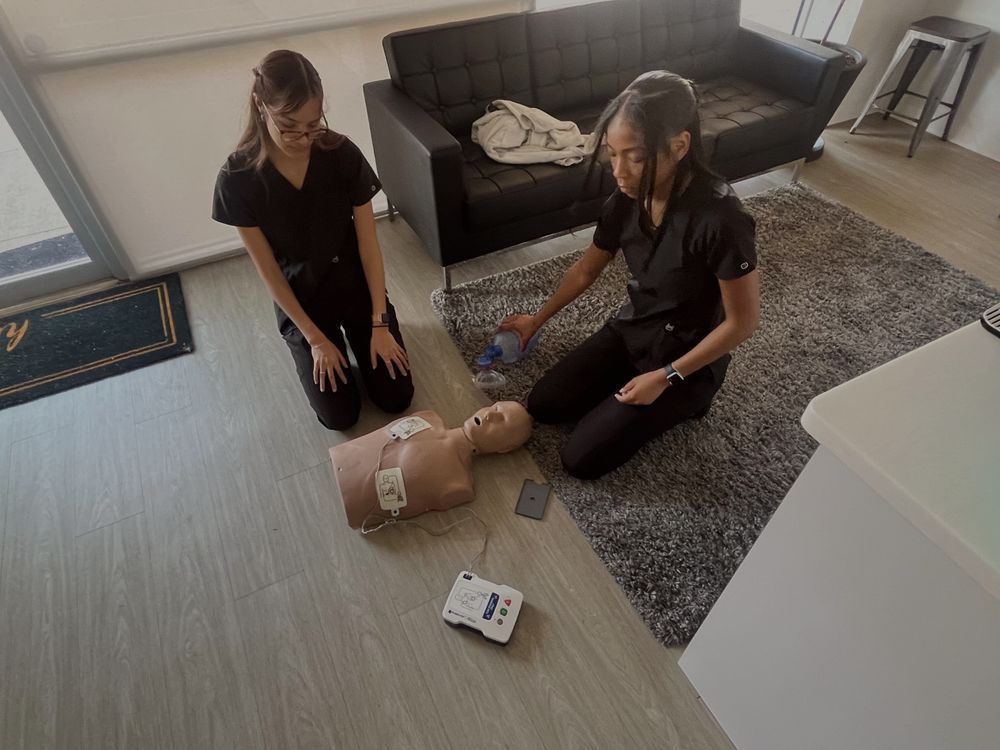
- Hands-on training — does the program include supervised clinical practice, or is it all lectures and quizzes?
- Certification prep — does it prepare you for the CCMA, RMA, or another recognized credential?
- Program length — accelerated medical assistant programs can get you trained in months; longer programs may include courses you don’t need
- Cost — is tuition transparent, and are payment plans available?
- Career support — will the program help you find a job after you graduate?
Explore what our program offers: Program details.
Step 3: Complete your training
During training, you’ll develop the clinical and administrative skills that employers need. A strong program covers:
Clinical competencies:
- Vital signs measurement and documentation
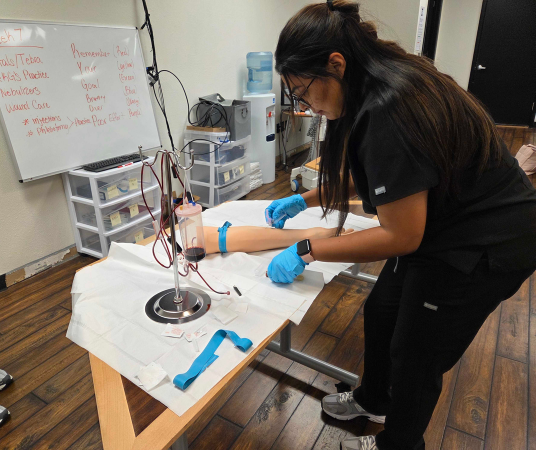
- Phlebotomy (blood draws) and specimen collection
- Injection techniques (IM, subcutaneous, intradermal)
- EKG/ECG placement and interpretation basics
- Infection control, sterilization, and OSHA compliance
- Patient positioning and exam assistance
Administrative competencies:
- Electronic health records (EHR) navigation
- Appointment scheduling and patient flow management
- Insurance verification and medical billing basics
- HIPAA compliance and patient privacy
- Professional communication in clinical settings
The best programs integrate hands-on practice throughout — so by the time you finish, you’ve already performed these skills under supervision, not just read about them.
Step 4: Gain clinical experience
Many programs include an externship or clinical rotation where you work in a real medical office. This is your chance to:
- Apply your skills in a live environment
- Get comfortable with the pace and unpredictability of clinical work
- Build professional relationships that can lead to job offers
- Add real experience to your resume
Even if your program doesn’t include a formal externship, any supervised clinical practice during training counts toward building your confidence and competence.
Step 5: Pass a certification exam
To become a certified medical assistant, you’ll need to pass a nationally recognized exam. The most common options:
CCMA (Certified Clinical Medical Assistant)
- Issued by: National Healthcare Association (NHA)
- Format: Computer-based, multiple-choice
- What it tests: Clinical knowledge, patient care, phlebotomy, EKGs, infection control, administrative procedures
- Why it’s popular: Widely accepted, accessible eligibility requirements, strong industry recognition
RMA (Registered Medical Assistant)
- Issued by: American Medical Technologists (AMT)
- What it tests: Clinical and administrative medical assisting
CMA (Certified Medical Assistant)
- Issued by: American Association of Medical Assistants (AAMA)
- Requirements: Graduation from a CAAHEP-accredited program
Choose the certification that aligns with your training program and your career goals. If your program prepares you for the CCMA, that’s often the most straightforward path.
Step 6: Start your job search
With training and certification complete, you’re ready to apply for positions. Medical assistant jobs are available in:
- Physician offices and primary care clinics
- Outpatient care centers and urgent care facilities
- Specialty practices (dermatology, cardiology, orthopedics, pediatrics)
- Hospitals and health systems
Your training program, externship connections, and certification all work together to make you a strong candidate — especially in Orlando, where demand for trained medical assistants continues to grow.
Ready to start the process?
- Explore the program: Program details
- Review tuition and payment options: Tuition
- Talk to our team: Contact
- Apply: How to apply
You're only a few months from the medical assistant career you deserve.